
Thursday, December 25, 2008
The family wisdom of localism, Part I
I'm busy wading through my third book on localism, this time Animal Vegetable Miracle by Barbara Kingsolver. It hews to the same pattern as the other two: professional worker comes to understand that the global economy is bad, gives up her comfy lifestyle and pursues a local business - in this case farming - instead.

Wayne, how come we don't shop at Whole Foods?
All the books adopt a folsky tone, reminiscent of Stuart Maclean (raconteur of dull, 'middle Canada' tales, for the small-town, pie-baking, antique-shopping masses that only exist in the misty, nostalgic minds of CBC programmers - but I digress.) Localist books are filled with references to the joys of country living and family foibles, how wonderful it is to know your neighbours, earnest about the problems facing family farms - and even a little shame-faced at being so earnest. But like a kindly mother, they're not going to lecture you. Instead they chide you, gently, that if you changed your habits, the world would be a better place. Here's Kingsolver on home-made cheese and her mother-in-law:

Stupid capitalism, interfering with my idealization of feudalism
Somewhere between the bucolic pastures and nostalgia for pre-capitalist commodity production, the localists make a leap between cause and effect.
They're dimly aware of capitalism. They mention the very real problems that agribusiness create: monoculture production that destroys topsoils, GM seed production that takes seed-stock out of the hands of farmers and into those of the corporations, abandonment of seed varieties. But they put all this down to size. "The larger the corporation, the more distant its motives are apt to be from the original spirit of organic farming", Kingsolver writes, as if small corporations had impeccable motives. Farming "keeps people independent from domineering central powers." (150) Her folksiness veers towards Sarah Palin as she indulges in a little shadenfreude, anticipating the sufferings of millions: "when centralization collapses on itself, as it inevitably does, back we go to the family farm." (178)

When we become peasants after the collapse, we'll be able to spend more time outdoors
Waiting for the collapse is less than neighbourly, and it's based on a fundamental misunderstanding about capitalism. Capitalism is a social relation, not a set of things. Size matters, but it's not as important as what capitalism creates: a global market, which forces commodity prices down to the absolute minimum. This is market compulsion. Capitalists - of any size - who sell for more will be undersold by others. They get bigger because it's cheaper: economies of scale cost less. It's not a choice. To quote the Communist Manifesto,
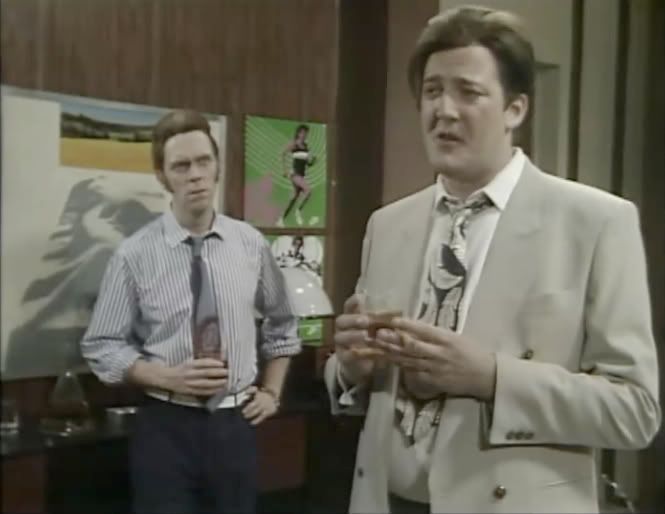
Blast! It's the damned global market that makes us drink!
Localists tell story after story of frustrated local business people, trying to work ethically but being undersold by the power of large corporations. Caught by the very system they don't understand, they can only think like the petty-bourgeois they are. They don't want to smash the state, take over the corporations or build a workers' movement to resist capitalism. Instead they do what well-informed petty-bourgeois socialists have always done: appeal to people's reason, and beg them to shop differently.
It's like tracking down a murderer, and once you've found him, counselling all his potential victims to give him a wide berth. Agribusiness destroys the earth and our health, so isn't it cheaper, the localists argue, to spend a few dollars more on organic, local food? Kingsolver goes out of her way to argue a local-food lifestyle isn't expensive or elitist. But the whole point of externalities, like pollution, is that they're external: not borne by consumers. That's the anarchy of the market: capitalists plan according to the bottom line, not social need.

See what proper planning could build?
To change that, you have to attack the problem at its source: the power of capitalist enterprise - and its political arm, the state - to determine production priorities. When workers have to sell their labour power to survive, spending less matters right now. This is the logic of existing in a system where long-term survival is left up to individuals. Acting according to your own, narrow interests is, in a partial but real way, rational. We can blame stupid consumers all we like, but they won't change their priorities until we create a society that doesn't leave individuals to survive according to the whims of the market. The market, not consumers, dictates what gets made and how.
Tomorrow: when the petty-bourgeois try to change the world.

Wayne, how come we don't shop at Whole Foods?
All the books adopt a folsky tone, reminiscent of Stuart Maclean (raconteur of dull, 'middle Canada' tales, for the small-town, pie-baking, antique-shopping masses that only exist in the misty, nostalgic minds of CBC programmers - but I digress.) Localist books are filled with references to the joys of country living and family foibles, how wonderful it is to know your neighbours, earnest about the problems facing family farms - and even a little shame-faced at being so earnest. But like a kindly mother, they're not going to lecture you. Instead they chide you, gently, that if you changed your habits, the world would be a better place. Here's Kingsolver on home-made cheese and her mother-in-law:
She made ricotta routinely, to the end of her life.
Laura was her name, ultimate known as Nonnie, and I suppose she'd have loved to see us on a summer Saturday making mozzarella together: daughter, grandson, great-granddaughters, and me, all of us laughing, stretching the golden rope [of cheese] as far as we could pull it. Three more generations answering hunger with the oldest art we know, and carrying on.

Stupid capitalism, interfering with my idealization of feudalism
Somewhere between the bucolic pastures and nostalgia for pre-capitalist commodity production, the localists make a leap between cause and effect.
They're dimly aware of capitalism. They mention the very real problems that agribusiness create: monoculture production that destroys topsoils, GM seed production that takes seed-stock out of the hands of farmers and into those of the corporations, abandonment of seed varieties. But they put all this down to size. "The larger the corporation, the more distant its motives are apt to be from the original spirit of organic farming", Kingsolver writes, as if small corporations had impeccable motives. Farming "keeps people independent from domineering central powers." (150) Her folksiness veers towards Sarah Palin as she indulges in a little shadenfreude, anticipating the sufferings of millions: "when centralization collapses on itself, as it inevitably does, back we go to the family farm." (178)

When we become peasants after the collapse, we'll be able to spend more time outdoors
Waiting for the collapse is less than neighbourly, and it's based on a fundamental misunderstanding about capitalism. Capitalism is a social relation, not a set of things. Size matters, but it's not as important as what capitalism creates: a global market, which forces commodity prices down to the absolute minimum. This is market compulsion. Capitalists - of any size - who sell for more will be undersold by others. They get bigger because it's cheaper: economies of scale cost less. It's not a choice. To quote the Communist Manifesto,
The need of a constantly expanding market for its products chases the bourgeoisie over the entire surface of the globe. It must nestle everywhere, settle everywhere, establish connexions everywhere.There is no 'outside' to capitalism, no safe spaces where well-meaning entrepreneurs can work hard and be rewarded. You can't cajole, entreat or nag your way out of the compulsion to produce for the gloval market. It destroys everything, including Grandma Nonnie's cheese-making, before it:
All fixed, fast-frozen relations, with their train of ancient and venerable prejudices and opinions, are swept away, all new-formed ones become antiquated before they can ossify. All that is solid melts into air, all that is holy is profaned, and man is at last compelled to face with sober senses his real conditions of life, and his relations with his kind.Unless, of course, you're a localist.

Blast! It's the damned global market that makes us drink!
Localists tell story after story of frustrated local business people, trying to work ethically but being undersold by the power of large corporations. Caught by the very system they don't understand, they can only think like the petty-bourgeois they are. They don't want to smash the state, take over the corporations or build a workers' movement to resist capitalism. Instead they do what well-informed petty-bourgeois socialists have always done: appeal to people's reason, and beg them to shop differently.
It's like tracking down a murderer, and once you've found him, counselling all his potential victims to give him a wide berth. Agribusiness destroys the earth and our health, so isn't it cheaper, the localists argue, to spend a few dollars more on organic, local food? Kingsolver goes out of her way to argue a local-food lifestyle isn't expensive or elitist. But the whole point of externalities, like pollution, is that they're external: not borne by consumers. That's the anarchy of the market: capitalists plan according to the bottom line, not social need.

See what proper planning could build?
To change that, you have to attack the problem at its source: the power of capitalist enterprise - and its political arm, the state - to determine production priorities. When workers have to sell their labour power to survive, spending less matters right now. This is the logic of existing in a system where long-term survival is left up to individuals. Acting according to your own, narrow interests is, in a partial but real way, rational. We can blame stupid consumers all we like, but they won't change their priorities until we create a society that doesn't leave individuals to survive according to the whims of the market. The market, not consumers, dictates what gets made and how.
Tomorrow: when the petty-bourgeois try to change the world.
Labels: localism, petty-bourgeois


