
Tuesday, March 24, 2009
Book Review - Days of Hope, Andre Malraux
Days of Hope tells the story of a panoply of revolutionaries as they struggle against Franco in the Spanish Civil War. The book spans the events of 1936: Franco's initial uprising against the Republicans, and the repeated military engagements leading to Franco's unsuccessful attempt to take Madrid.

This is a military history of the Spanish Civil War, which is the book's strength and weakness. Malraux is an incredibly gifted writer. He takes us through breathtaking vistas of Spanish countryside, and the bombing of civilian Madrid, with a confident pen that contrasts the stark horrors of war with the small details of everyday life. The narrative weaves like a camera between dozens of different players:
This isn't solely due to Malraux's descriptive skill. Characters take long pages to explain their motivations. The Negus, a bearded anarchist, rails against all authority; Manuel, a young Communist officer, grows to accept his responsibilities as a leader; Slade, an American journalist, tries to stay aloof from the barbarity around him. Dozens more share their thoughts - and these are not normal thoughts. Well-crafted statements on politics, morality and philosophy emerge fully-formed in casual conversation. It took me months to read Days of Hope, because I kept getting lost trying to follow the complex threads of discussion. Malraux can be justly accused of making his characters mouthpieces for his own views. But to his credit, the ideas he's promulgating are bold.
This is the biggest strength of Days of Hope. In these post-ideological times, it's hard to remember that millions of people flocked to different revolutionary banners. Malraux's characters talk about the relation between Party and state, what makes someone pick up a gun to fight for socialism, the role of revolution in history. These are all conversations I've had with individuals: Malraux puts them on an epic scale, where they belong. If anything, the current capitalist crisis may provoke others to return to these questions:
It would be easy to leave the story there, as a tale of intelligent bravado, content in misty nostalgia for the days when the Left pulled its weight in the world. But it's precisely this focus on war and heroism that mark Days of Hope as flawed.
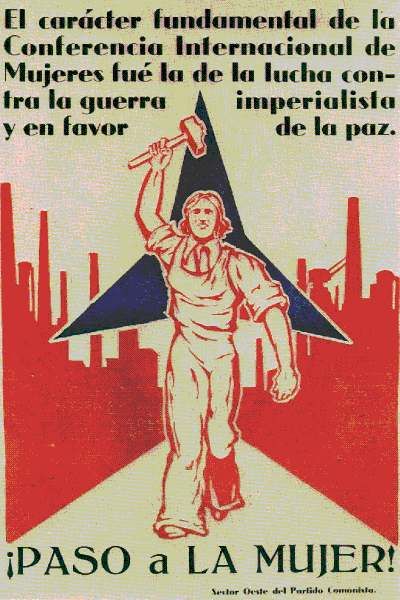
First of all, there are no major women characters. Women are spoken of fondly by the soldiers, and here and there they appear as themselves - mainly elderly peasants fleeing the bombardment. I'm against including characters for what they represent, but it's an historical fact that women fought in the front lines in Spain. Their absence makes Malraux's work less the manly treatise on brotherly sacrifice he wants it to be, and more an attempt to deny women's place in history altogether.
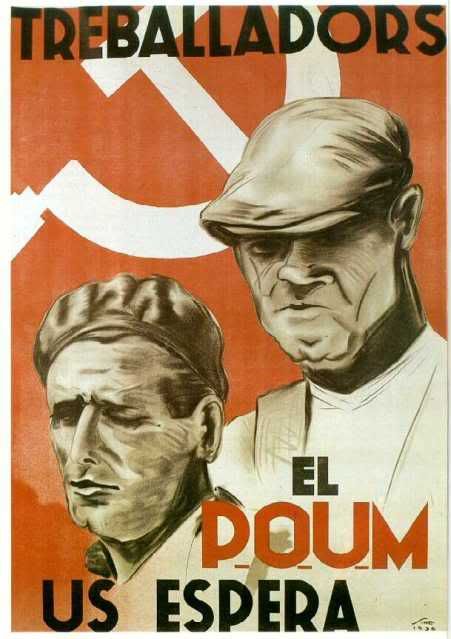
Secondly, the focus on war shrouds a bigger point. Of course it was a war - but what marked Spain was that it was also a revolution, against the bourgeoisie, landed property and the church. The tragedy of Spain is that the Communist Party, under directions from Stalin, turned the revolution into a regular war between armies. Arrayed against the combined forces of Franco, Italy and Spain, it was a war they were bound to lose. Land and Freedom makes this point well, as does Homage to Catalonia.
However, Malraux is telling the story of the war and the Communists and anarchists who fought it. The revolution, when it does get mentioned, is the domain of starry-eyed idealists who are long on enthusiasm and short on discipline. Here's an exchange between two officers, Garcia, a leftist, and Hernandez, a Catholic officer in the Republican army. Garcia tells him
Malraux was not an arm-chair intellectual. He organized shipments of planes and crews from France to fight for Spain, and toured America to raise money for the Republican cause. However, he famously ended up a Gaullist, and in Days of Hope one can see the roots of opportunism, 'the end justifies the means' which changes the ends altogether, from liberation to dictatorship. That does not detract from the novel's power or beauty, but it is an object lesson in the dangers of losing sight of one's goal.
In the single passage Malraux names women revolutionaries, the journalist Slade is caught in the bombardment of Madrid by fascists. He hears a "rhythmically uttered phrase":
This is the strength of Malraux's work: whatever his trajectory, he understood not only the battle for human freedom, but how it's a battle for ordinary people to fight and win.

This is a military history of the Spanish Civil War, which is the book's strength and weakness. Malraux is an incredibly gifted writer. He takes us through breathtaking vistas of Spanish countryside, and the bombing of civilian Madrid, with a confident pen that contrasts the stark horrors of war with the small details of everyday life. The narrative weaves like a camera between dozens of different players:
"All the morning," Moreno said, "I've felt as if an earthquake were taking place." He meant that it was not so much fear of the fascists that gripped the crowd as the sort of terror a cataclysm inspires; the idea of 'giving in' never entered their heads - one doesn't talk of giving in to an earthquake.It's impossible not to be drawn in by the chaos. I haven't felt so gripped by a war narrative since playing Call of Duty 2.
To a jangle of bells an ambulance sped past.
A black crash and the glasses on the tables sprang up like toy rabbits into the air and landed tinkling back amongst saucers, spilt liquor and V-shaped splinters from the windows. The panes had caved in like drum-heads as the bomb exploded on the boulevard outside. A waiter's tray toppled over, bounded on the floor with a thin clash of cymbals, muted by the silence.(314)

This isn't solely due to Malraux's descriptive skill. Characters take long pages to explain their motivations. The Negus, a bearded anarchist, rails against all authority; Manuel, a young Communist officer, grows to accept his responsibilities as a leader; Slade, an American journalist, tries to stay aloof from the barbarity around him. Dozens more share their thoughts - and these are not normal thoughts. Well-crafted statements on politics, morality and philosophy emerge fully-formed in casual conversation. It took me months to read Days of Hope, because I kept getting lost trying to follow the complex threads of discussion. Malraux can be justly accused of making his characters mouthpieces for his own views. But to his credit, the ideas he's promulgating are bold.
This is the biggest strength of Days of Hope. In these post-ideological times, it's hard to remember that millions of people flocked to different revolutionary banners. Malraux's characters talk about the relation between Party and state, what makes someone pick up a gun to fight for socialism, the role of revolution in history. These are all conversations I've had with individuals: Malraux puts them on an epic scale, where they belong. If anything, the current capitalist crisis may provoke others to return to these questions:
"For a thinker, the revolution's a tragedy. But for such a man, life, too, is tragic. And if he is counting on the revolution to abolish his private tragedy, he's making a mistake - that's all... There aren't umpteen ways to fight, there's only one and that's to fight to win. One doesn't engage in a war or revolution just to please oneself." (339)

It would be easy to leave the story there, as a tale of intelligent bravado, content in misty nostalgia for the days when the Left pulled its weight in the world. But it's precisely this focus on war and heroism that mark Days of Hope as flawed.
First of all, there are no major women characters. Women are spoken of fondly by the soldiers, and here and there they appear as themselves - mainly elderly peasants fleeing the bombardment. I'm against including characters for what they represent, but it's an historical fact that women fought in the front lines in Spain. Their absence makes Malraux's work less the manly treatise on brotherly sacrifice he wants it to be, and more an attempt to deny women's place in history altogether.

Secondly, the focus on war shrouds a bigger point. Of course it was a war - but what marked Spain was that it was also a revolution, against the bourgeoisie, landed property and the church. The tragedy of Spain is that the Communist Party, under directions from Stalin, turned the revolution into a regular war between armies. Arrayed against the combined forces of Franco, Italy and Spain, it was a war they were bound to lose. Land and Freedom makes this point well, as does Homage to Catalonia.
However, Malraux is telling the story of the war and the Communists and anarchists who fought it. The revolution, when it does get mentioned, is the domain of starry-eyed idealists who are long on enthusiasm and short on discipline. Here's an exchange between two officers, Garcia, a leftist, and Hernandez, a Catholic officer in the Republican army. Garcia tells him
"Because you have to live politically, you have to act in terms of politics; and your duties as an officer bring you every moment into touch with politics. Whereas the cause you have in mind is not political. It is based on the contrast between the world in which you live and the world of your dreams. But action can only be envisaged in terms of action. The business of a political thinker is to compare one set of hard facts with another... our side or Franco's; one system or another system. He is not fighting against a dream, a theory, or another Apocalyptic visiion."In revolutionary Spain, comparing "one set of hard facts with another" led to the Communists disbanding revolutionary brigades, and unleashing secret police terror on anarchists and non-Communists alike. It led to a ban on factory and land take-overs by workers, and returning property to the hated clerical aristocracy - all in the name of discipline.
"It is only for a dream's sake that men die."
"Hernandez, the habit of thinking about what ought to be instead of what can actually be done is a mental poison... Moral 'uplift' and magnanimity are matters for the individual, with which the revolution has no direct concern; far from it. I am very much afraid the only link between them, as far as you're concerned, is the prospect you may lay down your life in the cause of both." (183)

Malraux was not an arm-chair intellectual. He organized shipments of planes and crews from France to fight for Spain, and toured America to raise money for the Republican cause. However, he famously ended up a Gaullist, and in Days of Hope one can see the roots of opportunism, 'the end justifies the means' which changes the ends altogether, from liberation to dictatorship. That does not detract from the novel's power or beauty, but it is an object lesson in the dangers of losing sight of one's goal.
In the single passage Malraux names women revolutionaries, the journalist Slade is caught in the bombardment of Madrid by fascists. He hears a "rhythmically uttered phrase":
At last Slade guessed what it was, though he could not catch the words. He had heard the same rhythmic chant a month previously. In response to words he could not hear, that human gong was beating out: "No pasaran." Slade had seen La Passionaria, dark, austere, widow of all the slain Asturians, had seen her leading a fierce and solemn procession marching beneath red banners inscribed with her famous phrase, Better be a hero's widow than a coward's wife, had heard twenty thousand women chanting, in answer to another long, incomprehensible phrase, this same refrain: "No pasaran." He had been less moved by them than by this smaller, but unseen, crowd, whose desperate courage rose towards him through the smoke-clouds of the burning city. (331)

This is the strength of Malraux's work: whatever his trajectory, he understood not only the battle for human freedom, but how it's a battle for ordinary people to fight and win.
Labels: Communism, Days of Hope, fascism, Malraux, Spanish Civil War


